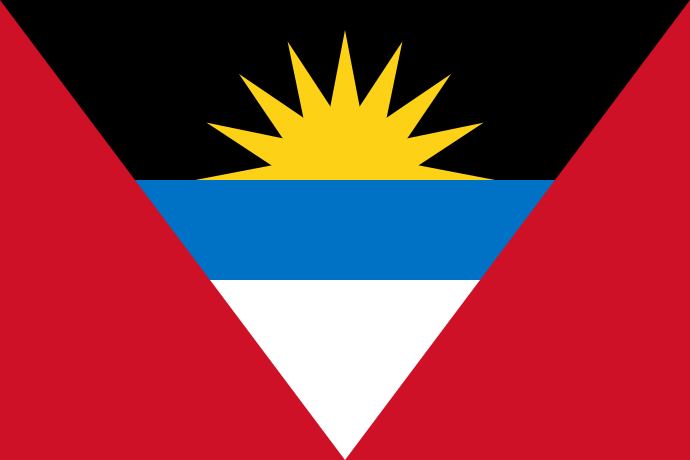
Antigua and Barbuda is a sovereign island republic in the Americas' West Indies, located between the Caribbean Sea and the Atlantic Ocean. It consists of two large islands, Antigua and Barbuda, separated by around 40 kilometers (25 miles), as well as smaller islands (including Great Bird, Green, Guiana, Long, Maiden, Prickly Pear, York Islands, and Redonda). The permanent population is estimated to be 97,120 (2019), with Antigua accounting for 97 percent of the total. St. John's is the capital and main port and city of Antigua, whereas Codrington is the largest town in Barbuda. Antigua and Barbuda are located in the Leeward Islands, part of the Lesser Antilles, about around 17°N of the equator.
Christopher Columbus discovered Antigua in 1493 and named it after the Church of Santa Maria La Antigua. Britain colonized Antigua in 1632, and Barbuda in 1678. Antigua and Barbuda joined the West Indies Federation in 1958, after being a component of the Federal Colony of the Leeward Islands since 1871. When the federation was dissolved in 1967, it became one of the West Indies Associated States. Independence from the United Kingdom was given on November 1, 1981, after self-government in its internal affairs. Antigua and Barbuda is a Commonwealth member, and Elizabeth II is the country's monarch and head of state.
Antigua and Barbuda's economy is notably reliant on tourism, which accounts for 80 percent of GDP. Antigua and Barbuda, like other island nations, is particularly vulnerable to the effects of climate change, such as the sea-level rise and increased intensity of extreme weather events like hurricanes, which have direct impacts on the island through coastal erosion, water scarcity, and other challenges. As of 2019, Antigua and Barbuda has a 0% individual income tax rate. The government also has contentious citizenship by investment scheme, with the 23rd most powerful passport in the world as of 2022.