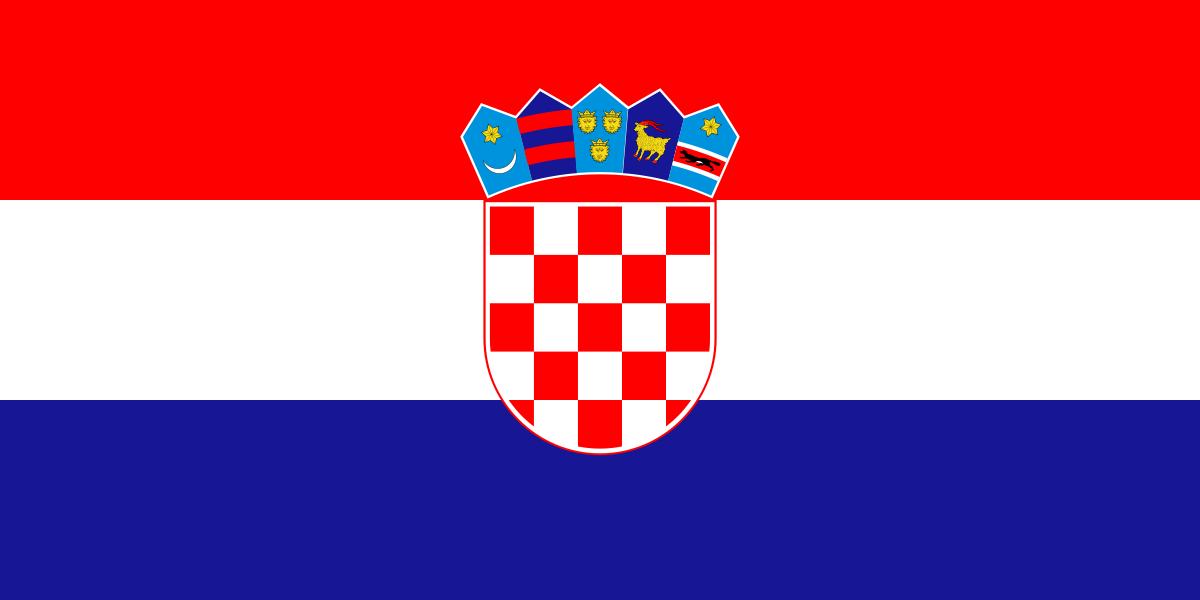
Croatia is a nation in Central and Southeast Europe that is officially known as the Republic of Croatia. It has an Adriatic Sea coastline and borders Slovenia to the northwest, Hungary to the northeast, Serbia to the east, Bosnia and Herzegovina and Montenegro to the southeast, and Italy to the west and southwest. With twenty counties, Croatia's capital and biggest city, Zagreb, represents one of the country's principal subdivisions. The nation covers 56,594 square kilometers (21,851 square miles) and has a population of about 3.9 million people.
Croats came in the sixth century and divided the area into two duchies by the ninth. Croatia gained international recognition for the first time on June 7, 879, under the reign of Duke Branimir. By 925, Tomislav had become the first monarch, bringing Croatia to the status of a kingdom. Croatia formed a personal union with Hungary in 1102 during the succession issue after the end of the Trpimirovi dynasty. In the face of Ottoman occupation, the Croatian Parliament elected Ferdinand I of Austria to the Croatian throne in 1527. The State of Slovenes, Croats, and Serbs was declared independent of Austria-Hungary in Zagreb in October 1918, and amalgamated into the Kingdom of Yugoslavia in December 1918. Following the Axis invasion of Yugoslavia in April 1941, the majority of Croatia was absorbed into the Independent State of Croatia, a Nazi-installed puppet state that perpetrated genocide against Serbs, Jews, and Roma. A resistance effort resulted in the establishment of the Socialist Republic of Croatia, which became a founding member and component of the Socialist Federal Republic of Yugoslavia after the war. Croatia proclaimed independence on June 25, 1991, and the War of Independence lasted four years after the proclamation.
Croatia is a sovereign state ruled by a parliamentary system. It is a founder member of the Union for the Mediterranean, the European Union, the United Nations, the Council of Europe, NATO, and the World Trade Organization. Croatia has been an active participant in United Nations peacekeeping, contributing soldiers to the International Security Assistance Force and taking a nonpermanent seat on the United Nations Security Council for the 2008–2009 term. Since 2000, the Croatian government has made infrastructure investments, particularly in transportation routes and amenities along Pan-European corridors.
Croatia is classed as a high-income economy by the World Bank and rates extremely high on the Human Development Index. The economy is dominated by the service, industrial, and agricultural sectors, in that order. Tourism is an important source of income for Croatia, which is one of the top 20 tourist destinations in the world. With significant government spending, the state controls a portion of the economy. Croatia's most significant commercial partner is the European Union. Croatia offers social security, universal health care, and free primary and secondary education, as well as cultural assistance via state institutions and business investments in media and publishing.