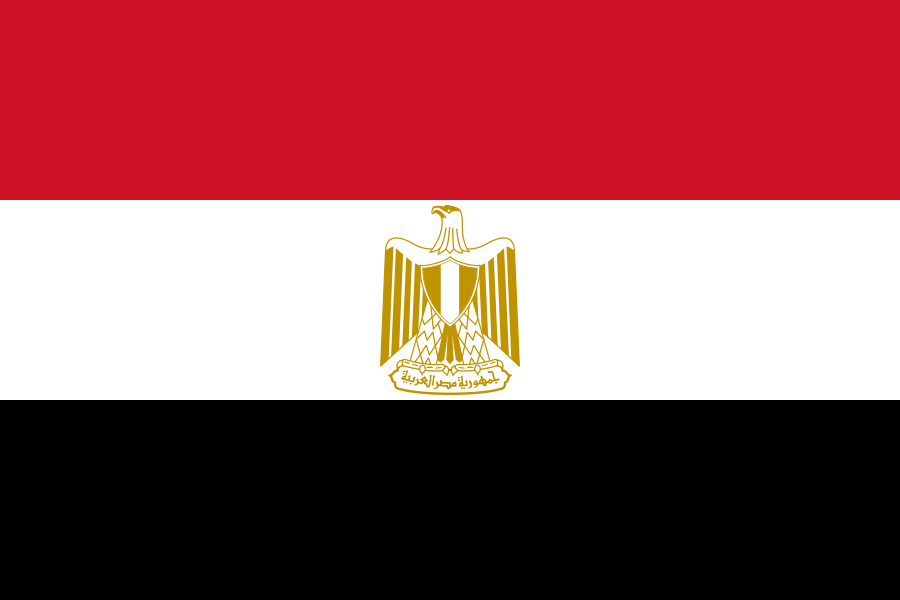
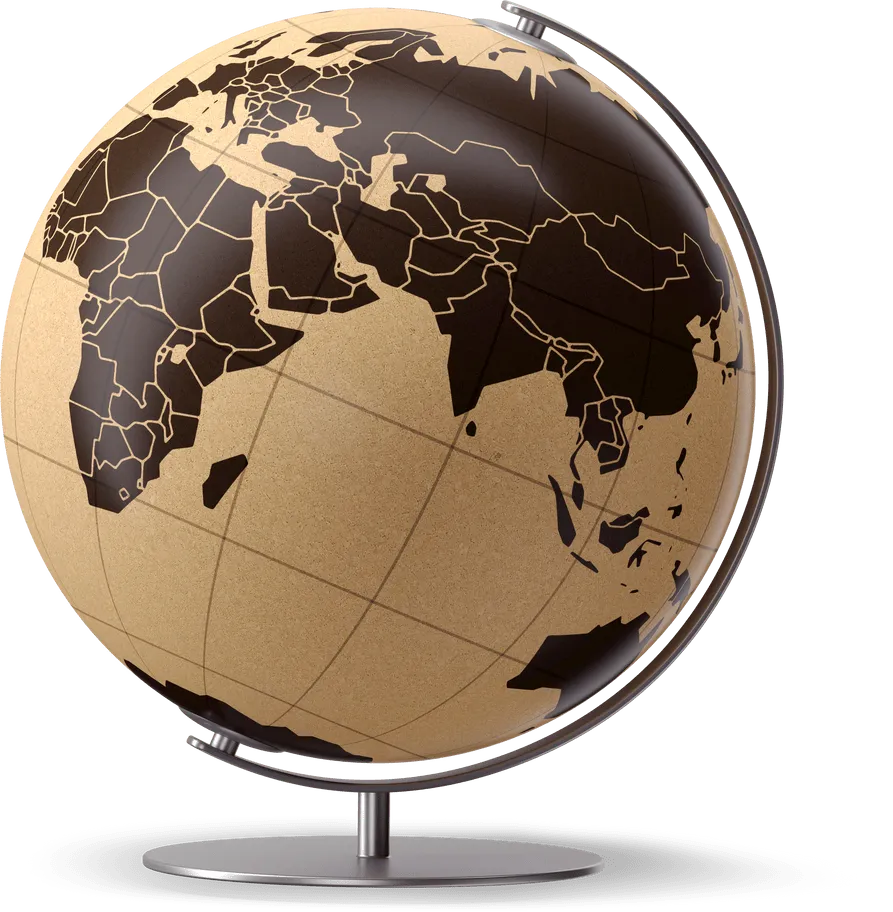
Egypt, formally the Arab Republic of Egypt, is a transcontinental republic that spans the northeastern corner of Africa and the southwest corner of Asia through the Sinai Peninsula. It is bounded to the north by the Mediterranean Sea, to the northeast by the Gaza Strip (Palestine) and Israel, to the east by the Red Sea, to the south by Sudan, and to the west by Libya. Egypt is separated from Jordan and Saudi Arabia by the Gulf of Aqaba in the northeast. Cairo is Egypt's capital and biggest city, while Alexandria, the country's second-largest city, is a major industrial and tourism center on the Mediterranean coast. Egypt is the 14th most populous nation in the world, with a population of almost 100 million people.
Egypt has one of the oldest histories of any nation, dating back to the 6th–4th millennia BCE throughout the Nile Delta. Ancient Egypt, regarded as the birthplace of civilization, saw some of the first advancements in writing, agriculture, urbanization, organized religion, and central government. This heritage is reflected in iconic structures such as the Giza Necropolis and its Great Sphinx, as well as the ruins of Memphis, Thebes, Karnak, and the Valley of the Kings, which remain a major focus of scholarly and public attention. Egypt's long and rich cultural past is an intrinsic element of its national identity, reflecting its unique transcontinental position as the Mediterranean, Middle Eastern, and North African all at the same time. Egypt was an early and prominent Christian center, but it was fully Islamized in the seventh century and remains a mostly Sunni Muslim nation, but with a considerable Christian minority and various smaller religions.
Egypt became a monarchy after gaining independence from the British Empire in 1922. Egypt proclaimed itself a republic during the 1952 revolution, and in 1958 it combined with Syria to establish the United Arab Republic, which disintegrated in 1961. Throughout the second half of the twentieth century, Egypt experienced social and religious unrest as well as political instability, waging multiple violent battles with Israel in 1948, 1956, 1967, and 1973, and temporarily occupying the Gaza Strip until 1967. Egypt signed the Camp David Accords in 1978, formally withdrawing from Gaza and recognizing Israel. From political upheaval, including the recent 2011 revolution and its aftermath, to terrorism and economic underdevelopment, the nation continues to confront problems. Egypt's current administration, a semi-presidential republic headed by Abdel Fattah el-Sisi, has been branded as authoritarian or as leading an authoritarian regime responsible for the country's dismal human rights record by a number of watchdogs.
Egypt's official religion is Islam, and Arabic is its official language. Egypt is the most populated nation in North Africa, the Middle East, and the Arab world, the third-most populous in Africa (after Nigeria and Ethiopia), and the fourteenth-most populous in the world, with over 100 million people. The vast majority of its population resides around the Nile River's banks, a region of roughly 40,000 square kilometers (15,000 square miles), where the only fertile land can be found. The Sahara desert, which covers the majority of Egypt's area, is sparsely populated. About half of Egypt's population lives in cities, with the majority concentrated in Greater Cairo, Alexandria, and other large Nile Delta cities.
Egypt is seen as a regional force in North Africa, the Middle East, and the Muslim world, as well as a global middle power. It is a developing nation, with a Human Development Index rating of 116th. It has a diverse economy that is the third-largest in Africa, the 33rd-largest in nominal GDP, and the 20th-largest in PPP terms. Egypt is a founding member of many organizations, including the United Nations, the Non-Aligned Movement, the Arab League, the African Union, the Organization of Islamic Cooperation, and the World Youth Forum.