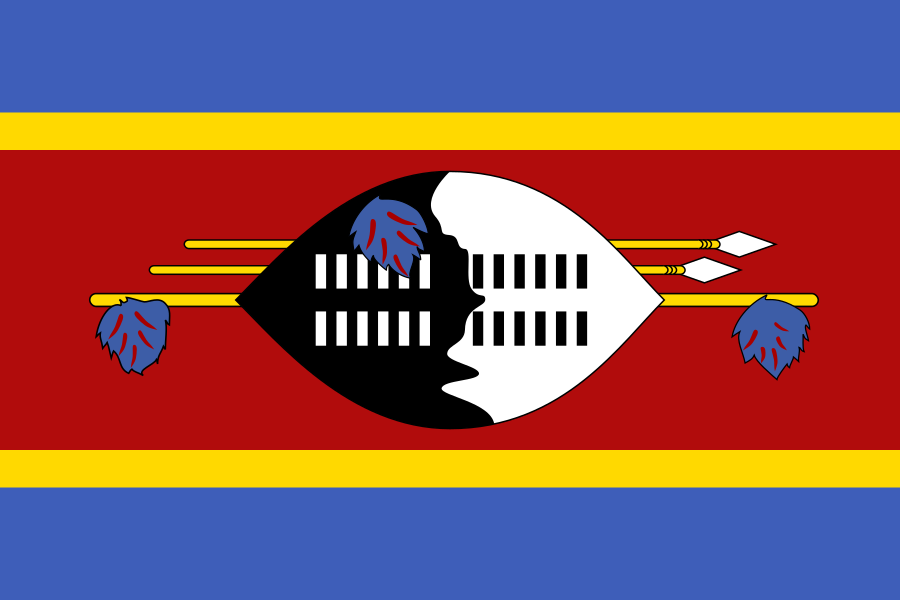
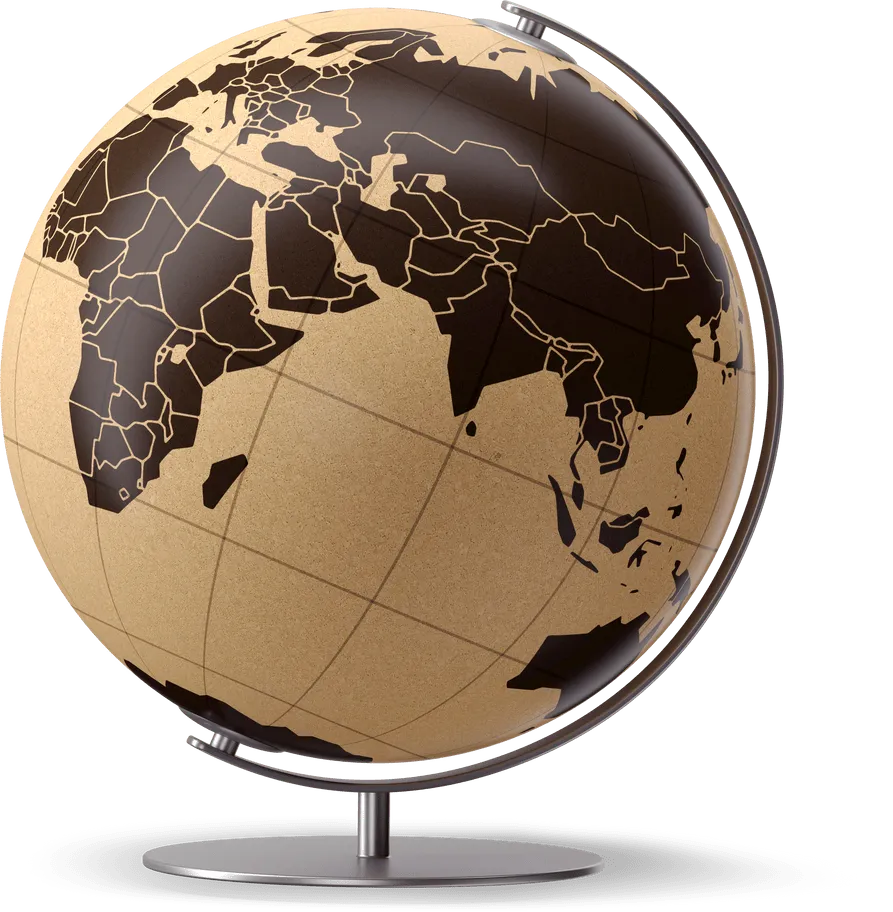
Eswatini is a landlocked nation in Southern Africa, formally known as the Kingdom of Eswatini and previously known as Swaziland. It is bounded to the northeast by Mozambique and to the north, west, south, and southeast by South Africa. Eswatini is one of Africa's smallest nations, measuring just 200 kilometers (120 miles) north to south and 130 kilometers (81 miles) east to west; nonetheless, its climate and geography are varied, ranging from a chilly and mountainous highveld to a scorching and parched Lowveld.
The ethnic Swazis make up the majority of the population. Swazi is the most widely spoken language (siSwati in native form). Under the leadership of Ngwane III, the Swazis built their kingdom in the mid-18th century. The nation and the Swazi are named after Mswati II, the 19th-century ruler during whose reign Swazi territory was extended and united; the current borders were set up in 1881, during the Scramble for Africa. Following the Second Boer War, the kingdom was a British protectorate under the name Swaziland from 1903 until it regained independence on September 6, 1968. The official name was changed from the Kingdom of Swaziland to the Kingdom of Eswatini in April 2018, reflecting the Swazi name.
The government is an absolute monarchy, the last of its type in Africa, and King Mswati III has governed since 1986. Every five years, elections are conducted to select the House of Assembly and Senate majorities. The current constitution went into effect in 2005. The nation's most prominent events are Umhlanga, the reed dance conducted in August/September, and incwala, the kingship dance held in December/January.
Eswatini is a developing nation with a lower-middle-income economy. As a member of the Southern African Customs Union (SACU) and the Common Market for Eastern and Southern Africa (COMESA), Eswatini's currency, the lilangeni, is tied to the South African rand to guarantee economic stability. The biggest commercial partners of Eswatini are the United States and the European Union. The agriculture and industrial industries employ the bulk of the country's workforce. Eswatini is a member of the African Union, the Southern African Development Community (SADC), the Commonwealth of Nations, and the United Nations.
The Swazi population is plagued by serious health challenges, including HIV/AIDS and (to a lesser degree) TB. HIV infection affects around 26% of the adult population. Eswatini has the world's 12th-lowest life expectancy, at 58 years, as of 2018. Eswatini's population is youthful, with a median age of 22 years as of 2018, with persons aged 14 years or younger forming 35% of the overall population.