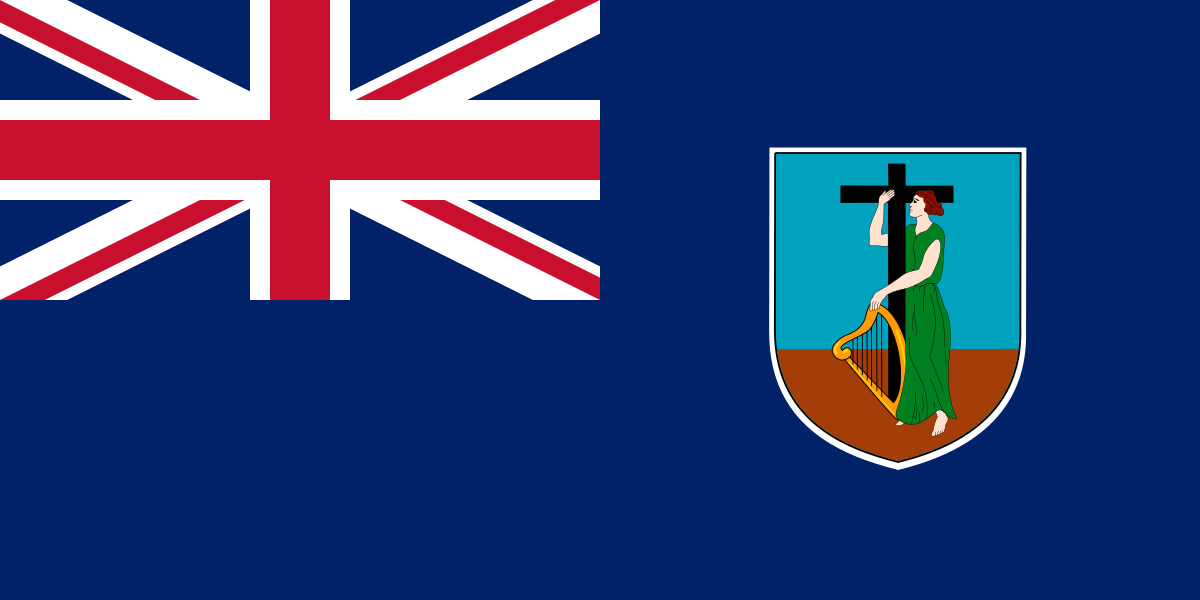
Montserrat is a Caribbean British Overseas Territory. It is part of the Leeward Islands, which form the northern end of the West Indies' Lesser Antilles chain. Montserrat is about 16 km (10 km) long and 11 km (7 mi) broad, with a shoreline of around 40 km (25 mi). It is known as "The Emerald Isle of the Caribbean" because of its similarity to coastal Ireland as well as the Irish heritage of many of its residents. Montserrat is the Caribbean Community's and the Organization of Eastern Caribbean States' sole non-fully independent full member.
The previously dormant Soufrière Hills volcano in the island's south erupted on July 18, 1995. Eruptions devastated Plymouth, Montserrat's Georgian-era capital city. Two-thirds of the island's population was forced to depart between 1995 and 2000, largely to the United Kingdom, leaving less than 1200 persons on the island in 1997. (rising to nearly 5000 by 2016). The volcanic activity continues, mostly impacting the area surrounding Plymouth, particularly its docking facilities, and the eastern side of the island at the old W. H. Bramble Airport, which was buried by volcanic activity flows on 11 February 2010.
Because of the scale of the current volcanic dome and the potential for pyroclastic activity, an exclusion zone spanning the southern half of the island to as far north as sections of the Belham Valley was imposed. Visitors are not normally allowed to enter the exclusion zone, however a glimpse of Plymouth's damage may be viewed from the top of Garibaldi Hill in Isles Bay. The Montserrat Volcano Observatory continues to regularly monitor the volcano, which has been relatively quiet since early 2010.
On the island's northwest shore, a new settlement and port are being built at Little Bay. While this work is underway, the government and corporate centers are located in Brades.